Wednesday, 9 September 2015

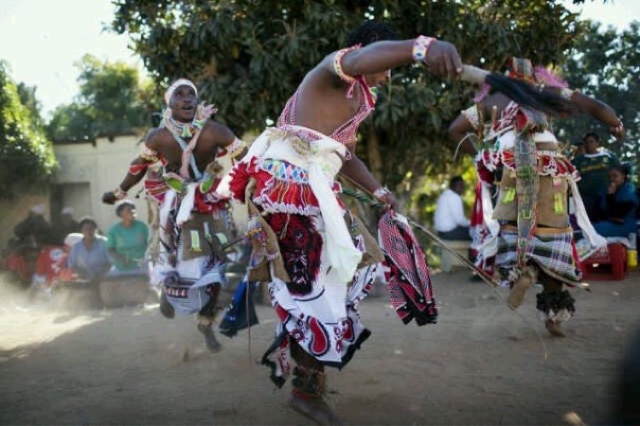
Black people and their Sangomas

I have been holding back on writing about Black people's relationship with Sangomas. Being Umngoma, I battled with the ancient concept which today is known as the "doctor-patient-confidentiality". The silence on this burning issue was just helping deepen stereotypes and robbed off my community crucial information. 
First, I want to address the practice of Ubungoma or being a Sangoma. I am uncomfortable when it is referred to as culture or cultural practice. It is not. This is part of African religion that has been demonised by the advent of Christianity in Africa. It brings me to one of the reasons why I am writing about the disturbing relationship Black people have with African religion. 
On Sundays, most Black South Africans are in church praying in the name of Jesus (peace be upon him). But Monday to Friday they don't mind the burning of Impepho to ask for guidance from the ancestral spirits. I know this is a testimony of many Sangomas, especially in more urban areas. Late night unexpected visits from people seeking a bone-reading session for different reasons. Late night because people still don't want to be seen paying a visit to a Sangoma. I don't know I have accepted this situation. 
Before I tell you some of my experience, let me give you this analogy; When using western medicine for an ailment, you need to adhere to a certain diet, behaviour and other conditions for a speedy recovery. 
Now, the same principle applies in African religion. I have found that most Black people who do not even believe in African religion use Sangomas as a last resort in their desperate situations, expecting miracles. Miracles do not happen without faith and a firm foundation of belief in anything one embarks on. Ubungoma goes hand in hand with Ubuntu. It is part of my training as a Sangoma to be compassionate. And this is the principle that has forced me to be patient with people who come for consultation, but have no relationship with their ancestors or even family history. It is our belief that our ancestors are the intermediary between us and God. A Sangoma is a link between those who have departed and those left behind. This is very important to understand for anyone seeking help from a Sangoma. 
I am sure you are familiar with the saying, 'An apple a day, keeps the doctor away'. My advice to Black people who subscribe to African religion, if you want to avoid misfortune and last minute visits to a Sangoma. Start a relationship with your ancestors. It can't be right that you consider African religion when everything else has failed. Burn impepho, buy brandy or whiskey or even water if brewing proper Umqombothi is too much work and perform a ritual to announce your promotion at work or your new house and car. Sometimes just give thanks to the gods. Perform rituals at least once every quarter. Visit your Sangoma for clarity and advice. Visit your Sangoma for that persisting headache that medical doctors could not fix. Visit your Sangoma if you need someone to talk to about anything. Visit your Sangoma for a steam bath with some sacred herbs. Get your Sangoma to explain the importance of prayers to the ancestors. Yes, prayers, not worship.
We need to break the stereotypes. Why can't you have a relationship with you Sangoma, the same way you do with your physician? Sangomas do not dish out korobela so you can keep your tenderpreneur. Sangomas do not bring back lost lovers. But they get you on a path where you won't lose anything that is important to you. 
Makhosi! 
Monday, 3 August 2015

Kasi Car Wash Conversations

Township rich culture amid the poverty and heartbreaking inequality, is something we use to console ourselves. The getting together on Sunday afternoon, after church. For some, after a hectic night out. Alcohol is cheap in the hood, so even the township diaspora come back home for fun. I am talking about the few that beat the odds, living in the suburbs and closer to work. The kids that beat adversity and got education and avoided jail, drug abuse and teenage pregnancy. There some like me who chose to stay in the township. Living side-by-side with these social ills. 
On Sundays we all gather at various fun points. Car wash here, Shisanyama there and the barber down the road. Someone will play some good music from their VW GTI for everyone to enjoy! Yesterday I heard guys talk about their one-night-stands and some talking how they went to bed alone. There was a group of guys exchanging Sunday newspapers and talking about Nkandla. I heard all the new Nkandla jokes and laughed until I cried. 
After my car was washed and ready to go, I realised I spent all my cash on meat and two Savannas. Didn't have money to pay the car wash boys. I asked if one of them could drive to the ATM with me. One of them jumped up and got in. Off we went! He calls himself Josta Dladla, he kinda looks that the famous soccer player. Except he has lots of gold teeth.  I have always asked how unemployed, young Black boys pay for these gold teeth. He told me his story and I guess it's a very layered, complicated issue. A story that needs to be told properly. Josta rolled down the window and he was  waving at everybody in his hood. He just wanted to be seen! 
He started asking about me; where I work and so forth. I lied to him, because I could see we are more or less the same age and he was starting to reflect on his own accomplishments. He wasn't buying my story. I told the truth eventually. And he opened up. I did not expect him to reminisce about the Bophuthatwana days. It's so difficult to tell it now in English even. But he was singing praises of Dr Lucas Mangope. He believes he would have been a police officer or in the army if Mangope was in charge. Apparently Mangope did not like boys loitering around the township doing nothing. He got them into the public service somehow. This is Josta Dladla's testimomy. 
It may not be enough, but I am glad he is making an honest living. He also forms part of this kasi culture that we embrace. 
I just feel all I can only tell these stories. I believe in the power of telling stories. It is sometimes a stepladder for people in Ivory Towers, to come down and smell reality. 

Wednesday, 11 February 2015

1990: Before we knew what we now know

11 February 1990, the day that hope was renenwed for the oppressed people of South Africa. It was before we knew FW de Klerk would want to cement his legacy using your release from prison to ease his guilt of being an apartheid sponsor.
It was before we realised that the white population of this country never met us halfway. That's because you crossed the midway bridge and told them "we will forgive". You were not without fault Madiba. You were only flesh and blood. Human. You accepted political power. Economic power remained where it was during apartheid. Your intensions were good. 11 February 1990 got us all drunk with euphria. We never saw it coming that some day a government you once run would kill workers during a protest.

When you were released, we did not know that some you would have to come back from retirement to scold the one you annointed, Thabo Mbeki. For refusing to save the lives of our brothers, sisters, mothers and fathers. It was long before we knew that some day there would be burning of schools. Even after our thirst for democracy was quenched in 1994. 
We didn't know we would still be at the bottom of the food chain. When you were released from prison, Hope reigned in our lives. We unrealisticly thought our dignity would be restored. 

But we remain with generations of memories of that day. When you walked out of prison and raised your fist. That is a permant reminder of where we come from. That day definitely put some of us on a path of personal success. It is bitter-sweet because communities we come from are today almost dysfunctional. Poverty is at the top of socio-economic woes. 
No doubt, you paved a way. Made the bumpy road look easy. But it seems Mbeki and Jacob Zuma started their new paths. There was never continuation of what you started. We didn't imagine racism, sexism and the access to clean water would still be our pain. 

I will admit that South Africa feels like home today since 11 February 1990. I just wish we all inheritted your fighting spirit against injustices on our people. Wish we all fought our social ill with the same strength you defeated aparhteid. Thank you for dedicating your life to ensure that some day we would work WITH white people, and not FOR them. Thank you for making us imagine the possibility of coexistence between us. My children and their children will know about you and your work. 

We always imagined how this country would be 20 years from that day. Now we know. And you had a lot to do with it. Thank you Tata! 
Ah Dalibhunga! 

Sunday, 18 January 2015

I typed this during today's church service

I have been trying to justify coming to church to myself for almost two weeks now. The church as an institution, has been at odds with the person I have become over the years. The identiy that I am comfortable with is a total opposite of what the church wants me to be. 
But today and for the past two weeks, I have been attending church services at the church where I grew up. From Sunday School, through to confirmation class. Also a place where I made friendships that still remain on solid foundation. A whole community that nurtured the leader that I am today congregates here. My love for music, especially classical music was born here. Everything that I am to my community, I learned here. 
I am typing this while in church, during the sermon. That's because the big part of my service is over. The singing. The music. 
I don't know why I have been trying to justify coming to church to myself. Is it because I have made friends with academics and professionals who have strong views against the church? Is it because I have failed for so long to defend what I believe in? Maybe it's my failure to mimic my own mother, who is also a Sangoma. She managed to be with our community, the church and remained committed to passing down traditions of our ancestors.
I feel like I belong here. It feels right to be here now. 
I have always maintained that being Lutheran and a Sangoma could never go together. Maybe it's time I reconciled the two without compromising myself. 

Sunday, 11 January 2015

Terrorism and a Clash of civilizations

I was one of the people who voiced disappointment when the mass media completely ignored a story of a ten-year-old girl who blew up a Nigerian market in a suicide bomb attack. It was almost like this incident was destructing the media's agenda of squeezing the juice out of the French terror attacks story.
But more people had already died in Nigeria at the hands of Boko Haram. And the reaction of that country's government has not been inspiring. It only embraces the widely known fact that black life is indeed cheap. How can we blame anyone for not protecting our own people? 

In my little experience, journalism has evolved. So much that when a certain media agenda setting is in full swing, nothing can shift it. Journalism is a business too. It is no longer a case of giving people something to think about, but we tell people what tot think, grab their attention and keep them consuming "our product". So, death of scores of Africans is not new to headlines. It has always been part of the headlines. Perhaps a decisive government or a President that reacts like French President Francois Hollande is a story we would rather tell. That's why I thought perhaps our reaction to tragedy highlights a clash of civilations. We react differently and the media will most probaly choose the reaction that will keep the story alive. When a man attacked a restaurant in Syndey, Australia, there were murmurings of why we went big on a story on such small scale. Small scale because "only two people died". For some countries, one life is one too many and they jealously guard their sovereignty. 
We can use the race card till the cows come home. We possess the power to change the way the world sees us. 
Africa needs young vibrant leaders to salvage our dignity. 

Saturday, 13 December 2014

Our Black and White reality


This morning I drove from Soshanguve to Hyde Park, Johannesburg. That's where I work. On my way out of Sosha, I experienced the usual buzz; taxis rushing to town and back to ferry more people. My people have money. They've been paid their bonuses. Some kid will eat in a restaurant for the first time today. The queues at bottle stores are reminiscent of the 1994 elections. Maybe I am taking it too far, but the bottom line is people will be spending lots of money on alcohol. The cooler boxes will be filled, we will drink and be merry. 


When I got on to the Ben Schoeman highway, I saw a different kind of approach to December holidays. Luxury cars from Pretoria East suburbs getting on to the freeway. Most of them towing their caravans, mountain bikes and trailers filled with holiday luggage. 


You already know where I am going don't you? At the risk of sounding like ANC officials who only offer excuses, I will say it. It is the legacy of apartheid that keeps us in the generational crisis of Black people abusing alcohol and mistaking it for Christmas celebration. Living in the Bantustans that we call townships - the only way to embrace the holiday season is to buy booze, blast the hi-fi you bought with your meager bonus and wake up with the same old problems year-in year-out. 


A few of us have chosen to break the cycle. But then we don't always survive because we become victims of crime because the rest of our people are not empowered enough to escape the generational crisis. That's why we leave the township. That's also why townships are stereotyped as dangerous and "not safe for us" to go. 


The oppressor knew what he was doing when he crammed us all in one space, away from the life that could have saved more people. But we are stuck together, hopeless, stressed, killing each other. We maintain the reputation of being the inferior race, and therefore Black life remains cheap.

I took time before I condemned President Jacob Zuma when he blamed Eskom's woes on apartheid. He is probably right. But he is a discredited man. It's not easy to take what he says and believe it. At least for many South Africans who have been let down by his leadership, or lack thereof.


I hope one day Sosha and Pretoria East traffic will converge on Ben Schoeman highway - to take a well deserved break from the hustle and bustle of the year gone by. The struggle continues.


Monday, 22 September 2014

I am the opposite of who I am

This week I celebrated a few milestones. It's been a year since I became News Editor at SA's most credible news organisation. The new car now a year old and still making me smile. My mom's almost 70th birthday. She is my shield and strength. Not to mention the love I share with my friend amd partner Lesley. 
Maintaining relatiosnhips and being great at what you do requires all of you 100 percent of the time. My job feels like an exam everyday. Imagine a final exam every single day. And of course there are times when I don't ace the exam. But getting it right when I do, is a great feeling. But the mistake I made, and still make today is "internalising" everything through all the trials and triumphs. While it thickens the skin, it poisons you inside. No longer at ease and you develop dis-ease. I developed high blood pressure. It sits right next to the accomplishments of my life. I rebelled against it and ignored it. Till today when I realised that the poison is now having a ripple effect on other parts of my life. 

My mother would likely lose her son. I would never live long enough to see the foundation of the family I started strengthen and flourish. I would lose all the important things. I would die rot in my grave when I could have saved myself. This is all because I want to pass a final exam every single day. It's because I do not have a strong filter to help me care only about what matters and benefits me. 

I am ashamed as an Aids activist who preach about a healthy lifestyle and motivating people to yearn for life. I have abandoned myself. I pray that it's not too late to turn the tide and live. 

I am the opposite of who I am. A healer who is not healed. I have had so many people who entrusted their lives to me. Nursed most of them back to health. But I am letting myself get consumed by a poison that I invited into my own body.